

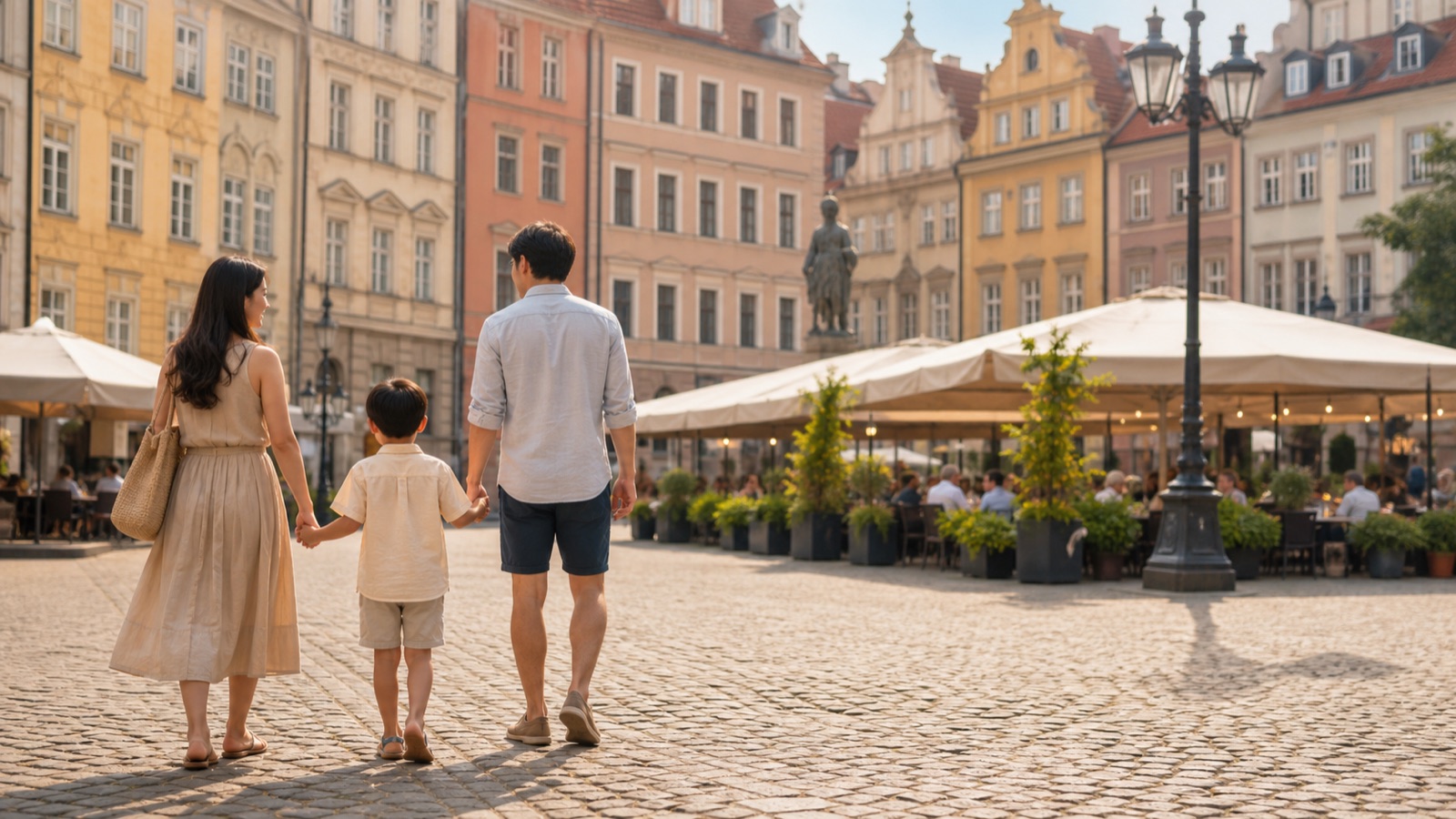
Family travel needs a different rhythm
A successful family trip in Europe is rarely about visiting the maximum number of landmarks. Children, parents, and grandparents all need different pacing, which means the itinerary should include rest, easy meals, predictable transport, and backup options.
Private travel planning helps because the schedule can be shaped around the family instead of forcing everyone into a fixed group-tour rhythm. This is especially useful when crossing cities, visiting smaller towns, or traveling with luggage.
Vehicles, child seats, and comfort
Vehicle choice matters. Families often need more space than the number of seats suggests because bags, snacks, jackets, strollers, and child seats all take room. A comfortable van can make long routes much easier.
Child seats should be requested in advance with the child's age and approximate weight. It is also worth planning rest stops before anyone becomes tired, rather than waiting until the day starts to feel difficult.
Food and hotel location
Meals can shape the entire mood of a family travel day. Restaurants should be chosen for location, timing, menu flexibility, and reliability rather than only reputation. A famous restaurant that requires a long detour may not be the right family choice.
Hotel location is equally important. Staying near walkable areas, public transport, or pickup points reduces friction every morning and evening. In Europe, convenience often matters more than a slightly larger room far outside the center.
Build in flexibility
The best family itineraries have a clear plan but also room to adjust. Bad weather, jet lag, nap schedules, and unexpected interests can all change the day.
A private itinerary gives families permission to slow down without losing the whole trip. That flexibility is often what turns a good Europe vacation into one everyone actually enjoys.